
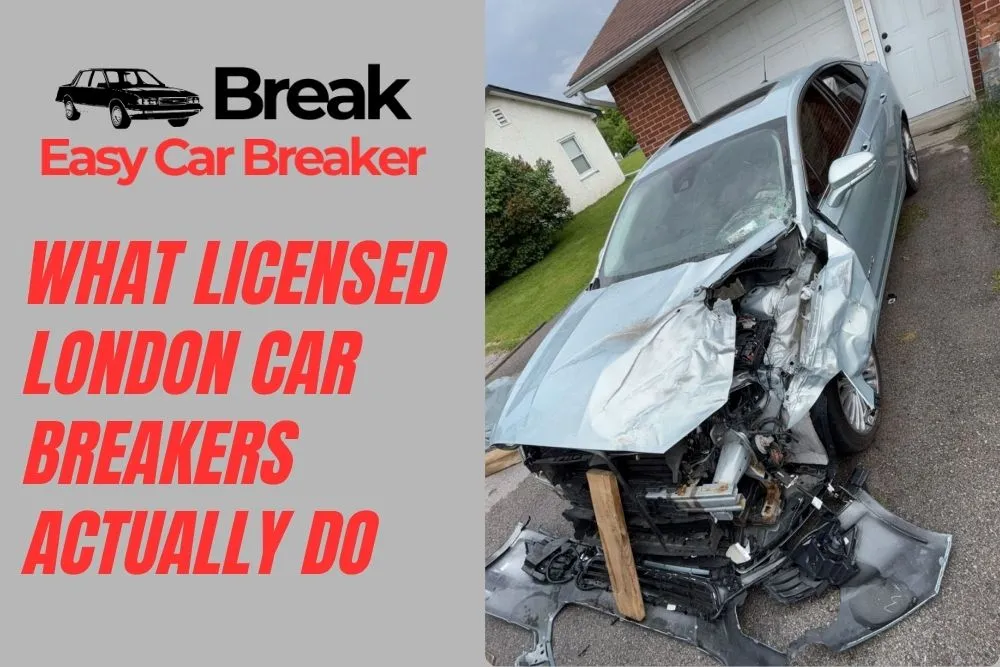
London streets are brutal on vehicles. Between the relentless stop-start traffic, the potholes, and the expanding ULEZ borders, cars here age faster than anywhere else. Every year, about 1.5 million of them reach the end of the line. But there’s a massive misunderstanding about what happens next. People still picture a muddy lot with a barking dog and a crusher. That’s ancient history. Today, a licensed London car breaker is running a high-tech logistics operation that has to hit strict 95% recycling targets. We aren’t just binning cars; we are harvesting them.
The Shift From Junk to Urban Mine
Walk into a proper Authorised Treatment Facility (ATF) these days, and you won’t see a graveyard. You’ll see a warehouse operation. The mindset has totally flipped. A car isn’t one big piece of trash to be squashed flat; it’s a collection of roughly 30,000 parts, and a lot of them are still worth money.
We don’t just look at the metal. We look for the gap between the car’s “London value” (which might be zero because of emissions) and its “parts value.”
What we are actually hunting for:
- Electronics: The ECU modules and sensors. These things are often on backorder at dealerships, making used ones gold dust.
- Precious Metals: Inside that catalytic converter are tiny amounts of Platinum and Palladium.
- The Clean Panels: A bumper or a door from a car with a blown engine is perfect for someone else’s repair job.
It’s not destruction. It’s precision dismantling.
The Toxic Stuff: Why Depollution Matters
Here is where the real work happens. Before we even think about crushing a shell, the car has to be neutralized. This is the big difference between a pro outfit and the random guy leaving flyers on your windshield.
Cars are basically storage tanks for nasty chemicals. If you hand your keys to an unlicensed operator, that stuff usually ends up leaking into the ground. We have to be surgical about it.
The Depollution Drill:
- Explosives: Yes, airbags are technically explosives. We have to detonate them remotely so they don’t blow up in a worker’s face later.
- The Gas: Air con units are full of R134a gas. It’s terrible for the ozone layer, so we vacuum it out into sealed cylinders.
- The Fluids: We don’t just pull the plug on the oil sump. We use special drills to pierce the shock absorbers and suck out the hydraulic fluid in a vacuum system.
Logistics: Getting It Off Your Driveway
London is a nightmare for moving big machinery. You’ve got narrow mews in Islington, red routes in Westminster that you can’t stop on, and low bridges everywhere.
This is where the scrap car removal teams earn their keep. It’s not just about having a tow truck. It’s about having the right truck.
- Tight Squeeze: If a car is stuck in an underground garage with a seized gearbox, a massive flatbed is useless. We need “spectacles-lift” trucks that can fit under the height barrier.
- Speed: A car left on the road without tax attracts council fines fast. We need to get in, load up without blocking the bus lane, and get out.
The Journey: From Driveway to Commodity
Once the good parts are on a shelf and the fluids are in a tank, you’re left with the bare shell. This is where the global market takes over.
- The Crush: The shell gets baled into a cube about the size of a large suitcase.
- The Shredder: That cube goes into a hammer mill. It spins at insane speeds and shatters the metal into fist-sized chunks in seconds.
- The Split: Magnets grab the steel, and fancy “eddy current” machines blast the aluminium and copper into different bins.
That steel doesn’t stay in the UK. It often gets shipped to places like Turkey or India, melted down, and turned into girders for new buildings. Your old hatchback could end up holding up a skyscraper.
The Legal Trap: Don’t Ignore The V5C
There is a lot of fraud in this game. The biggest risk with unlicensed operators is “cloning”—taking the identity of a clean car and putting it on a stolen one.
If you don’t do this right, your car can come back to haunt you.
- Ghost Tickets: You could get speeding fines months after you “sold” it.
- Tax Bills: The DVLA will keep charging you road tax if they don’t know the car is dead.
A real breaker cuts this cord. We issue a Certificate of Destruction (CoD). It’s a digital handshake with the DVLA that proves the chassis number is gone forever. No CoD, no proof.
Conclusion
Car breaking has evolved from a brute-force industry into a precise, environmental service. It’s about understanding the complex flow of materials in a dense city and ensuring hazardous waste doesn’t end up in our soil. When you’re ready to let go of a vehicle, you need a partner who handles the logistics and legalities professionally. That is exactly where Break Easy Car Breaker steps in. We ensure your car’s final journey is safe, legal, and compliant, giving you total peace of mind.